
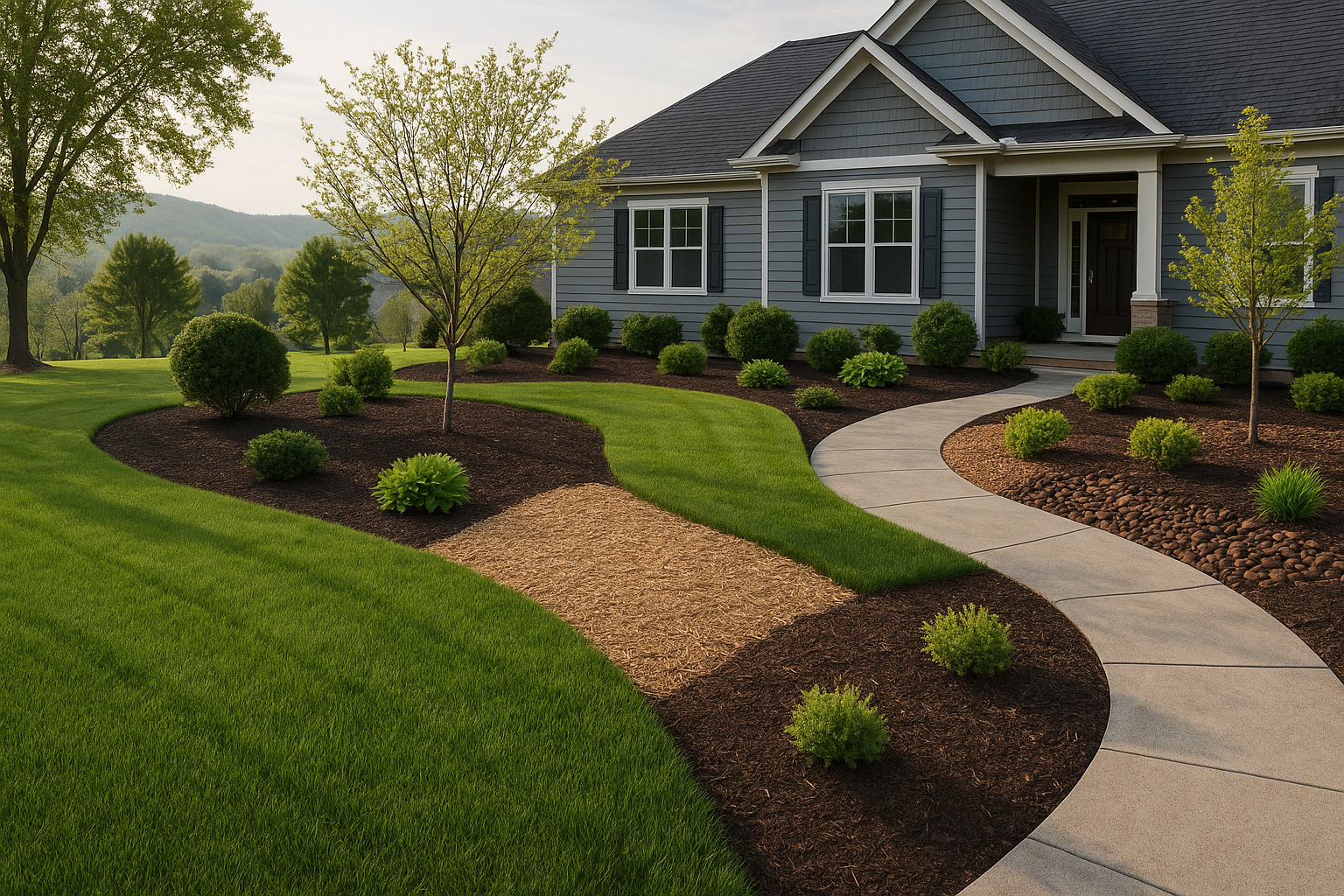
Walk into any garden center in Radford or Dublin and you'll find a wall of mulch options staring back at you. Bagged, bulk, dyed, natural, wood, rubber — it's a lot. Most homeowners just grab whatever's cheapest or whatever looks good in the bag. That's usually a mistake.
The right mulch does a lot more than make your beds look clean. It regulates soil temperature, holds moisture, suppresses weeds, and — depending on the type — can actually improve your soil over time. The wrong mulch can suffocate plants, attract pests, or wash away after the first hard rain.
Let's break down the most common mulch types, what they're actually good for, and how to choose the right one for your beds.
Why Mulch Matters More Than You Think
Before we get into types, let's talk about what mulch is actually doing in your landscape.
A proper 2–3 inch layer of mulch:
- Retains soil moisture — reducing how often you need to water by up to 25–50%
- Regulates soil temperature — keeping roots cooler in summer and warmer in late fall
- Suppresses weeds — blocking sunlight so weed seeds can't germinate
- Prevents erosion — especially important on sloped beds common in the New River Valley
- Improves soil health — organic mulches break down and feed your soil over time
Skip the mulch or do it wrong, and you're fighting weeds all season, watering constantly, and watching your plants struggle through Virginia's summer heat.
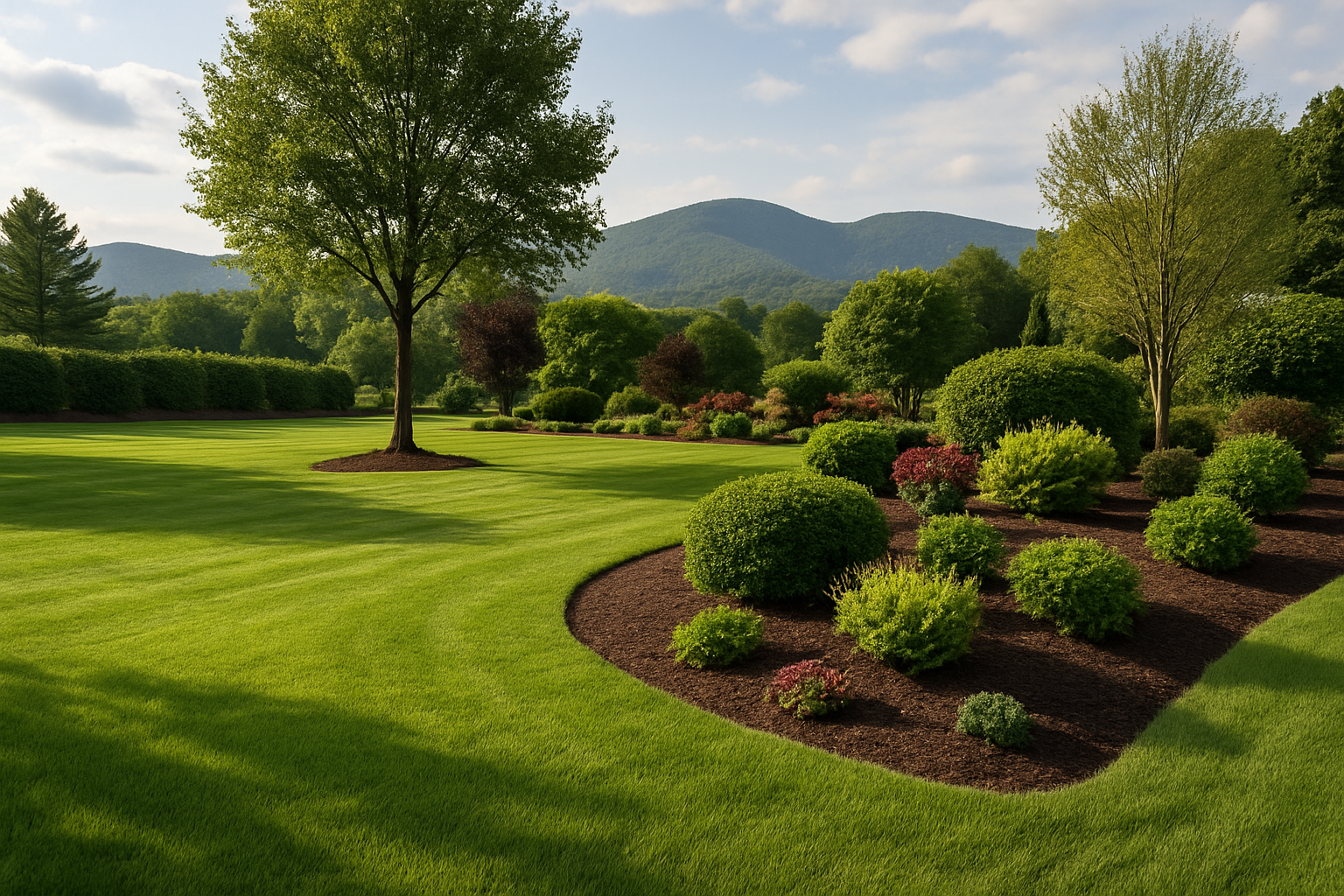
Our Mulching Services cover everything from material selection to proper installation — because how you apply it matters just as much as what you use.
The Main Types of Mulch
1. Shredded Hardwood Mulch
Best for: General landscape beds, around trees and shrubs, sloped areas
This is the workhorse of the mulch world, and it's what we use most often on residential jobs in Draper and Pulaski. Shredded hardwood — usually oak, maple, or mixed hardwoods — knits together as it settles, which means it stays put on slopes and doesn't wash away in heavy rain the way nuggets do.
It breaks down over one to two seasons, adding organic matter back into the soil. It's not flashy, but it does the job right.
Typical cost: $30–$45 per cubic yard in bulk
Watch out for: Dyed hardwood mulch (the bright red or black stuff). The colorant itself is usually carbon-based and not harmful, but dyed mulch is often made from recycled wood pallets or construction debris. That wood may have been treated with chemicals you don't want near your plants. Stick with natural hardwood when you can.
2. Wood Chip Mulch
Best for: Pathways, around established trees, naturalized areas
Wood chips are chunkier than shredded hardwood — think 1–3 inch irregular pieces. They take longer to break down, which means they last longer but contribute less to soil improvement in the short term.
They're great for high-traffic pathways and around the base of mature trees where you want long-lasting coverage without a lot of maintenance. They're not ideal for annual flower beds where you're digging around every season.
Fresh wood chips — especially from an arborist — can temporarily tie up nitrogen in the soil as they decompose. Keep them a few inches away from plant stems and don't till them into the soil.
Typical cost: Sometimes free from local tree services; $25–$40 per cubic yard if purchased
3. Pine Straw (Pine Needle Mulch)
Best for: Acid-loving plants, sloped beds, areas around pines and oaks
Pine straw is popular throughout Virginia, and for good reason. It's lightweight, easy to spread, and locks together in a mat that handles slopes well. It's also slightly acidic as it breaks down, which makes it a solid choice around azaleas, blueberries, hollies, and rhododendrons — plants that thrive in lower pH soil.
It doesn't last as long as hardwood mulch — plan on refreshing it once a year — but it's inexpensive and looks clean.
Typical cost: $4–$7 per bale; one bale covers roughly 20–25 square feet at 2 inches deep
Watch out for: Pine straw is not a good choice for beds with plants that prefer neutral or alkaline soil. Over time, it will shift the pH in a direction those plants don't like.
4. Rubber Mulch
Best for: Playgrounds, high-traffic areas — not landscape beds
Rubber mulch is made from recycled tires. It doesn't break down, it doesn't blow away, and it lasts for years. Sounds great, right?
For landscape beds, it's a bad idea. It doesn't improve soil. It can leach chemicals over time. It gets extremely hot in direct sun — hot enough to stress plant roots. And when you eventually want to remove it, you're in for a miserable afternoon.
Leave rubber mulch for playgrounds. Keep it out of your flower beds.
5. Straw Mulch
Best for: Vegetable gardens, newly seeded lawns — not ornamental beds
Straw (not hay — hay has seeds in it, which is a weed nightmare) is a solid choice for vegetable gardens and protecting newly seeded grass. It's cheap, it breaks down fast, and it keeps moisture in.
For ornamental beds, it looks out of place and breaks down too quickly to be practical. Use it where it makes sense and skip it everywhere else.
6. Gravel and River Rock
Best for: Dry landscapes, around hardscaping features, drainage areas
Inorganic mulches like pea gravel, river rock, or crushed stone don't break down, don't need to be refreshed annually, and look sharp around hardscaping features like patios and retaining walls. If you've got a hardscaping project with stone or concrete elements, rock mulch can tie the whole look together.
The downside: rock absorbs and radiates heat, which can stress plants in full sun. It also doesn't improve soil at all. And once leaves and debris start mixing in, it can be a pain to keep clean.
Best used in low-maintenance, low-water areas — not in beds with moisture-loving perennials.
How Much Mulch Do You Actually Need?
This is where a lot of homeowners go wrong — they either put down too little (pointless) or pile it on too thick (damaging).
The sweet spot is 2–3 inches for most landscape beds. Here's a quick formula:
Square footage × depth in inches ÷ 324 = cubic yards needed
So a 200 square foot bed at 3 inches deep needs about 1.85 cubic yards — call it 2 yards to be safe.
One thing we see constantly: mulch volcanoes. That's when mulch gets piled up 6–8 inches deep against the base of a tree trunk. It looks like a little volcano, and it slowly kills the tree by trapping moisture against the bark and inviting rot and pests. Keep mulch 2–3 inches away from any trunk or stem.
Timing: When Should You Mulch?
Spring and fall are the two best windows.
Spring mulching — done after the soil has warmed up a bit — helps lock in moisture heading into summer and gives you a clean, finished look for the growing season. In the New River Valley, that usually means late April into May.
Fall mulching — done after the first frost but before the ground freezes — insulates roots through winter and gives you a head start on weed suppression come spring.
Our Spring & Fall Cleanup packages include mulch refresh as part of a full seasonal bed prep — pulling weeds, edging, and laying fresh material so your beds look sharp going into each season.
Choosing the Right Mulch for Your Situation
Here's a quick cheat sheet:
| Situation | Best Mulch Choice |
|---|---|
| General landscape beds | Shredded hardwood |
| Sloped beds | Shredded hardwood or pine straw |
| Acid-loving plants | Pine straw |
| Around mature trees | Wood chips |
| Vegetable garden | Straw |
| Around hardscaping | Gravel or river rock |
| Playgrounds | Rubber mulch |
If you're not sure what your beds need, that's what we're here for. A quick site visit tells us a lot — soil type, drainage, plant selection, sun exposure — and we can make a recommendation that actually fits your landscape instead of just grabbing whatever's on sale.
Let Us Handle the Mulching
Mulching sounds simple until you're hauling 4 cubic yards of hardwood in a pickup truck, trying to spread it evenly without burying your plants or piling it against your tree trunks.
We do this every day across Draper, Dublin, Radford, and Pulaski. We know what works in this region, what the soil needs, and how to make your beds look clean and professional — not just covered.
Check out Our Work Gallery to see what a proper mulch job looks like, or get a free quote and we'll come take a look at your property.
Call us at 304-888-2969 or email [email protected]. We'll get it done right the first time.
Need Help With Your Lawn?
Veteran Lawncare & Landscaping serves Draper, Dublin, Radford, and Pulaski. Call us or get a free quote today.