
Most homeowners spend all spring and summer fighting their lawn — patching bare spots, fighting weeds, watering constantly — and still end up with a yard that looks tired by August. Here's the thing: the fix usually isn't a spring project. It's a fall one.
Fall aeration and overseeding is the most effective lawn renovation move you can make in Virginia. If you're in the New River Valley — Draper, Dublin, Radford, Pulaski — and your lawn has seen better days, this is the article you need to read before the season slips away.
What Is Aeration, Exactly?
Aeration is the process of pulling small plugs of soil out of your lawn — typically using a core aerator machine. Those plugs are about the size of your finger, pulled every few inches across the entire yard.
It sounds simple, but what it does is significant:
- Breaks up compacted soil so water, air, and nutrients can actually reach the root zone
- Reduces thatch buildup — that layer of dead grass and organic matter that chokes out new growth
- Creates seed-to-soil contact when you follow up with overseeding
- Improves drainage so you're not left with standing water after every rain
Virginia clay soil — which is common throughout the New River Valley — compacts hard over time. Foot traffic, mowing, and just the weight of rain packs it down. Roots can't push through compacted clay. Aeration fixes that.
Spike Aerators vs. Core Aerators — Don't Make This Mistake
If you're renting equipment or hiring someone, make sure they're using a core aerator, not a spike aerator. Spike aerators just punch holes in the ground without removing material. They can actually make compaction worse by pushing soil sideways. Core aeration pulls plugs out. That's the one you want.
What Is Overseeding?
Overseeding is spreading grass seed over your existing lawn — no tilling, no stripping, no starting from scratch. When done right after aeration, the seed falls into those open holes and makes direct contact with loose soil. That's where germination happens.
Without aeration, most seed just sits on top of compacted ground or thatch and never takes. You've probably seen this — you throw down seed in spring, water it, and get maybe 30% germination. The rest just washes away or dries out. Aeration changes that equation dramatically.
Why Fall Is the Right Time — Not Spring
This is where a lot of homeowners get it wrong. Spring feels like the natural time to fix a lawn. But for cool-season grasses — which is what most New River Valley lawns are running (tall fescue, Kentucky bluegrass, fine fescue) — fall is the prime window.
Here's why:
Soil temperature is ideal. In September and October, soil temps in Virginia are still warm enough for germination (above 50°F) but the air is cooling down. That combination is exactly what cool-season grass seed wants.
Less competition from weeds. Crabgrass and most summer annual weeds are dying off in fall. Your new seed isn't competing with them for space and resources.
More time to establish before stress. Seed that germinates in fall has the entire cool season to develop a root system before it faces the heat of next summer. Spring-seeded grass gets maybe 6-8 weeks before summer heat hits. Fall-seeded grass gets months.
Rain does some of the work. Fall in Virginia typically brings more consistent moisture than the dry spells of late summer. Less irrigation stress on new seedlings.
The target window for the New River Valley is generally mid-August through mid-October. Don't wait until November — soil temps drop too low and germination stalls.
Choosing the Right Seed for Virginia Lawns
Not all grass seed is created equal, and the bag matters. For the New River Valley region, you're almost always working with cool-season turf. Here's what works:
- Tall Fescue — The workhorse of Virginia lawns. Drought-tolerant, handles clay soil, stays green longer into fall and winter. Look for turf-type tall fescue varieties like Titan Rx or Falcon IV.
- Kentucky Bluegrass — Beautiful, dense turf but needs more water and maintenance. Better for irrigated lawns.
- Fine Fescue blends — Great for shady areas where other grasses struggle.
Avoid cheap big-box store seed mixes with a lot of filler or annual ryegrass. Annual rye germinates fast and looks good for a season, then dies. You want perennial varieties that come back year after year.
Seed rate matters too. For overseeding into existing turf, you're typically looking at 4-6 lbs per 1,000 square feet of tall fescue. If you're doing a heavier renovation on a thin lawn, bump that up to 8 lbs per 1,000 sq ft.
The Full Process: Step by Step
Here's how a proper fall aeration and overseeding job gets done:
1. Mow Short Before You Start
Drop your mowing height to about 2 inches before aerating. This helps the aerator cores penetrate better and gives seed better access to soil after.
2. Aerate the Entire Lawn
Run the core aerator in two directions — north-south and east-west — for maximum coverage. On compacted Virginia clay, two passes makes a real difference.
3. Leave the Plugs
Don't rake up the cores. They look messy for a week or two, but they break down and return organic matter to the soil. Leave them.
4. Apply Starter Fertilizer
Before or right after seeding, apply a starter fertilizer — something like Scotts Starter Fertilizer or a similar high-phosphorus blend. Phosphorus drives root development in new seedlings. This step gets skipped too often.
5. Overseed
Spread seed with a broadcast or slit seeder. A slit seeder (also called a slice seeder) cuts small grooves in the soil and drops seed directly in — excellent seed-to-soil contact. It's worth the extra step on thin lawns.
6. Water Consistently
New seed needs moisture to germinate. Water lightly 2-3 times per day for the first 2 weeks — just enough to keep the top inch of soil moist. Once seedlings are up and growing, back off to deeper, less frequent watering to encourage deep root growth.
7. Don't Mow Until It's Ready
Wait until new grass reaches about 3.5 inches before mowing. Mowing too early pulls seedlings out of the ground before they've rooted. Patience here pays off.
What Does It Cost?
For a typical residential lawn in the Radford or Pulaski area, professional aeration and overseeding runs roughly $150–$400 depending on lawn size, condition, and seed type. Larger properties or heavily thinned lawns that need more seed will run higher.
DIY is possible if you rent equipment — a core aerator rental runs $75–$100 per day — but you still need to buy quality seed and fertilizer, and you need to know what you're doing. Improper technique or wrong timing can waste the whole investment.
For most homeowners, having it done right once is worth more than doing it wrong twice.
Common Mistakes That Kill Results
Seeding too late. Once soil temps drop below 50°F consistently, germination stops. Mid-October is usually the cutoff in the New River Valley.
Using the wrong seed. Cheap seed with annual ryegrass gives you a green lawn for one season, then you're back to square one.
Skipping starter fertilizer. Seed without phosphorus is like building a house without a foundation. The roots won't develop properly.
Watering wrong. Too much water causes seed to rot or wash away. Too little and it dries out before germination. Light and frequent is the rule for the first two weeks.
Mowing too soon. Give new grass time to root before you run a mower over it.
What to Expect After
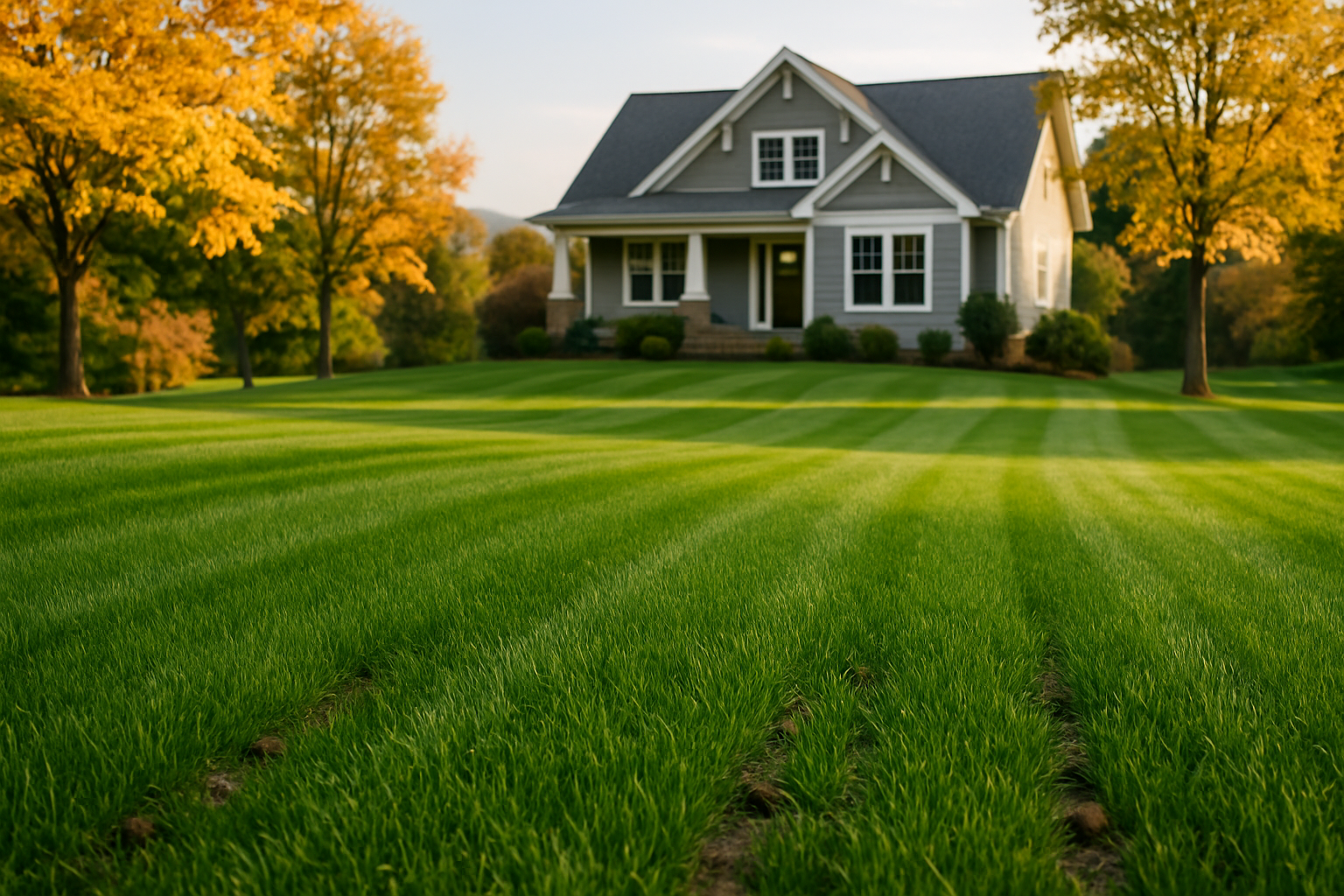
With proper fall aeration and overseeding, you should see germination in 7–14 days for tall fescue. By late October or November, you'll have a noticeably thicker, greener lawn. Come spring, that lawn will be ahead of where it's ever been — denser turf means fewer weeds, better drought resistance, and less work overall.
This is the kind of result that compounds. A thick, healthy lawn crowds out weeds naturally. You spend less on herbicides. You water less. You fight less.
If your lawn in Draper or Dublin has been struggling — thin spots, bare patches, weeds taking over — fall aeration and overseeding is the reset button.
Ready to Get It Done Right?
At Veteran Lawncare & Landscaping, we bring the same precision to your lawn that Josh brought to his military service — no shortcuts, no guesswork, done right the first time. We serve homeowners across Draper, Dublin, Radford, and Pulaski with professional Spring & Fall Cleanup and Lawn Maintenance Programs built around what your lawn actually needs.
Check out Our Work Gallery to see what a properly renovated lawn looks like, or Get a Free Quote and we'll walk you through exactly what your yard needs this fall.
Call us at 304-888-2969 or email [email protected]. Don't let another season go by with a lawn that's less than it should be.
Need Help With Your Lawn?
Veteran Lawncare & Landscaping serves Draper, Dublin, Radford, and Pulaski. Call us or get a free quote today.